Testing & maintenance
Cable testing and diagnostics that resolve slow speeds, dropouts, and connectivity issues, plus moves, adds, and changes that keep your infrastructure documented.
What we install
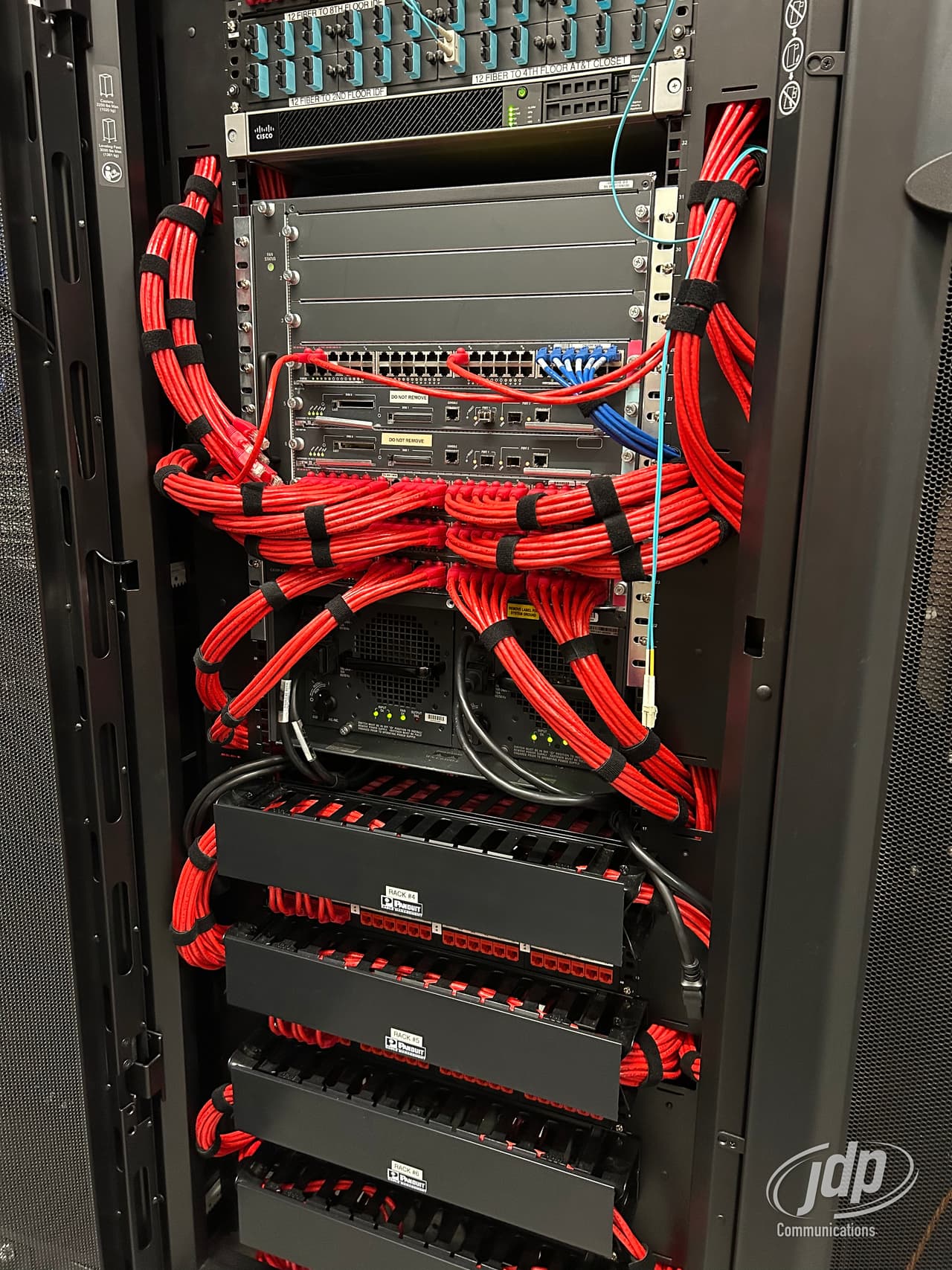
Most 'network problems' are physical-layer problems: a failed termination, a kinked pair, copper-clad aluminum cable overheating under PoE, or an undocumented change nobody remembers. Software can't fix bad copper; testing finds it.
We certify links with Fluke testers against the TIA-568 standard: wire map, length, insertion loss, NEXT, and return loss. For troubleshooting, we isolate the failing segment, re-terminate or re-pull it, and re-certify, with a labeled report showing the link now passes.
For buildings we maintain, moves, adds, and changes are documented as they happen, so your port maps stay true and the next project starts from facts instead of guesswork.
Common questions
Testing & maintenance FAQ
Why is my network slow on some drops?
Common causes: failed or partial terminations, runs longer than 100 meters, damaged pairs, or copper-clad aluminum (CCA) cable that can't carry the load. A certification test identifies the failure in minutes. Then we fix the physical cause and re-test.
What does a Fluke certification test check?
Wire map, length, insertion loss, NEXT (crosstalk), and return loss against the TIA-568 standard. A link either passes or fails. No opinions, just a report.
Can you test cabling another contractor installed?
Yes. We certify existing installations and deliver labeled reports, commonly used for tenant improvements, building purchases, and disputes over whether cabling meets spec.
Do you offer ongoing maintenance?
Yes. We handle moves, adds, and changes and keep your labeling and port maps current, so your infrastructure documentation stays accurate as the building changes.
Let's plan your install.
Tell us about your space and we'll scope the drops, racks, and pathways.